Among the short peptides drawing growing interest from research laboratories, KPV occupies a singular place. This tripeptide, a terminal fragment of a well-known hormone, concentrates much of the anti-inflammatory activity of its parent molecule while being stripped of its hormonal effects. For roughly fifteen years, it has been the subject of preclinical studies focused on intestinal, cutaneous, and systemic inflammation. This article offers a synthesis of the available scientific literature, strictly within a laboratory research context (research use only).
What is KPV?
KPV is a tripeptide composed of three amino acids: lysine (K), proline (P), and valine (V), hence its name. Its sequence, Lys-Pro-Val, corresponds to the last three residues of the C-terminal end of α-MSH (alpha-melanocyte-stimulating hormone), a 13-amino-acid peptide derived from pro-opiomelanocortin.
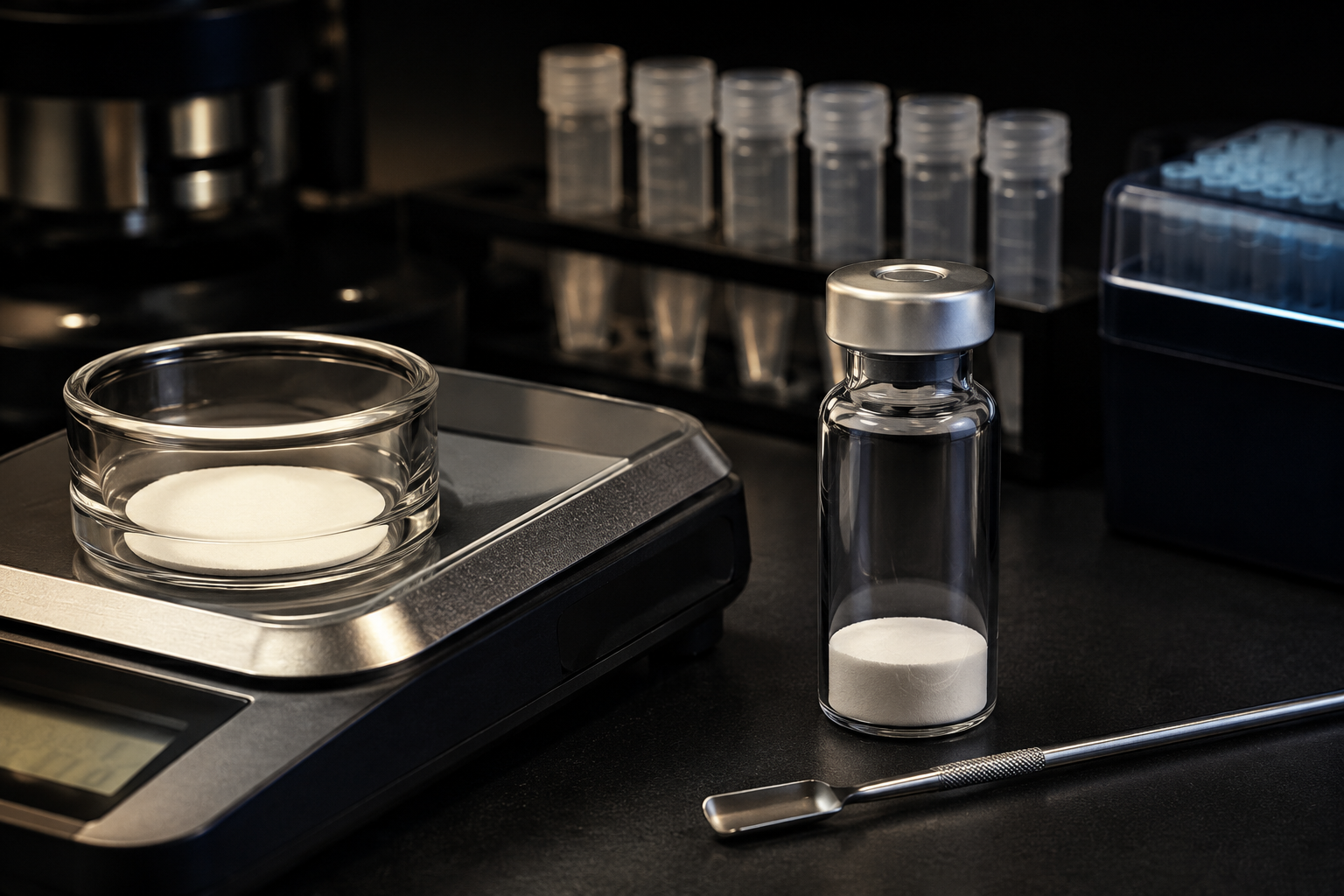
From a physicochemical standpoint, it is assigned a molecular formula close to C₁₆H₃₀N₄O₄ and a molecular weight of approximately 342.4 g/mol, with a CAS number often cited as 67727-97-3. It presents as a white lyophilized powder, described as highly soluble in water.
The notable point lies in its relationship to α-MSH. The full hormone acts on melanocortin receptors (MC1R to MC5R), involved in particular in pigmentation and appetite regulation. The KPV fragment, however, does not reproduce this high-affinity receptor binding: the literature describes it as retaining the anti-inflammatory activity of the parent sequence while shedding the pigmentary and metabolic effects associated with the complete hormone. This dissociation makes it an interesting subject of study for isolating the purely anti-inflammatory facet of melanocortin.
Mechanism of action under study
Mechanistic work converges on an intracellular action on the major inflammatory signaling pathways. KPV is studied as an inhibitor of the NF-κB pathway, a central transcription factor that orchestrates the expression of numerous pro-inflammatory genes. The data suggest it interferes upstream, at the level of IκB kinase activation, reducing the nuclear translocation of NF-κB observed in certain cellular models.
In parallel, several studies point to modulation of the MAPK (mitogen-activated protein kinases) pathways and a decrease in reactive oxygen species. These effects translate, in vitro, into a reduction in the production of pro-inflammatory cytokines such as TNF-α, IL-1β, and IL-6.
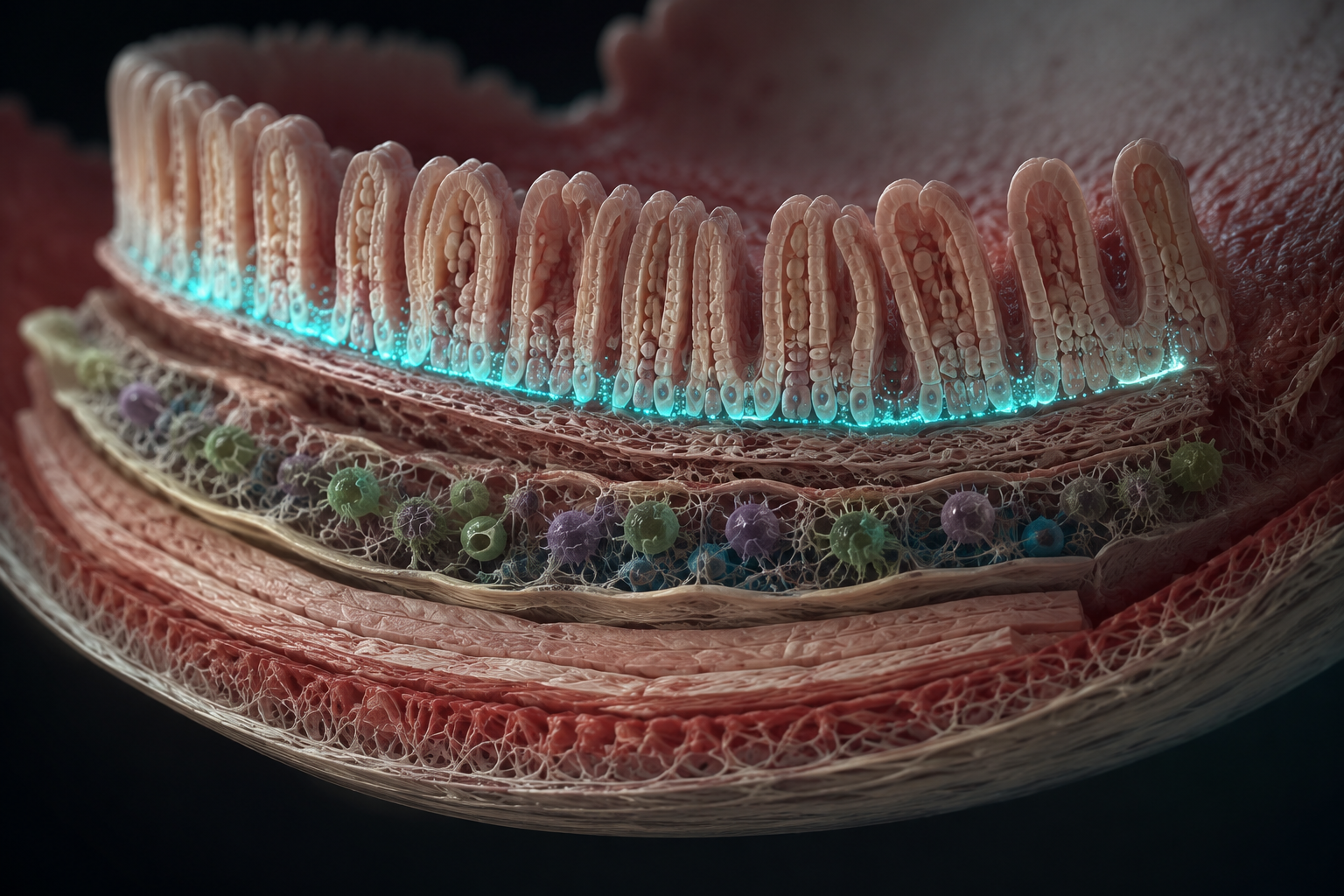
Another mechanistic aspect concerns transport. In the intestinal epithelium, KPV is thought to be taken up by the PepT1 transporter (a di- and tripeptide transporter), which would explain efficient internalization by epithelial and immune cells of the digestive tract. This entry route is central to research into its intestinal relevance.
Research areas
Three major axes structure the literature. The first, and most documented, is intestinal inflammation, particularly experimental models referencing inflammatory bowel disease (IBD). The second concerns the skin: wound healing, keratinocyte migration, and models of inflammatory dermatoses. The third pertains to inflammation in general and, more marginally, to avenues of neuroprotection and antimicrobial activity mentioned in a few exploratory studies.
What the literature shows
Two reference publications are frequently cited. Dalmasso and colleagues (Gastroenterology, 2008) described a PepT1-mediated uptake mechanism for KPV, associated with a reduction in intestinal inflammation in models combining cultured epithelial and immune cells (in vitro) and animal models. Kannengiesser and colleagues (Inflammatory Bowel Disease, 2008) reported anti-inflammatory potential of the tripeptide in murine models of inflammatory bowel disease.
It is essential to underline the nature of this evidence: these are preclinical studies, conducted on cell cultures and rodents. To date, the literature does not report established human clinical trials validating therapeutic efficacy. The results, while consistent across teams, remain at the stage of basic and applied research.
Effects and limitations observed in research
The effects reported in these experimental settings include a reduction in inflammation markers, attenuation of tissue damage in chemically induced colitis models, and support for epithelial barrier integrity. On the cutaneous front, some models describe improved re-epithelialization.
The limitations are equally important to state. Translatability to humans has not been demonstrated. The peptide's bioavailability, stability, and pharmacokinetics remain only partially characterized. Sample size, model diversity, and the absence of standardization complicate any generalization. Finally, the safety profile in humans is not documented within a regulatory framework.
Reconstitution & storage
In a research context, lyophilized KPV is generally stored at approximately -20 °C, protected from light and humidity. Since the powder is water-soluble, reconstitution is typically performed with a sterile aqueous solvent suited to the protocol. Once reconstituted, the solution is usually kept refrigerated between 2 and 8 °C and handled under aseptic conditions, with repeated freeze-thaw cycles to be avoided in order to preserve peptide integrity. These indications reflect good laboratory handling practices and not use in humans.
Doses used in studies
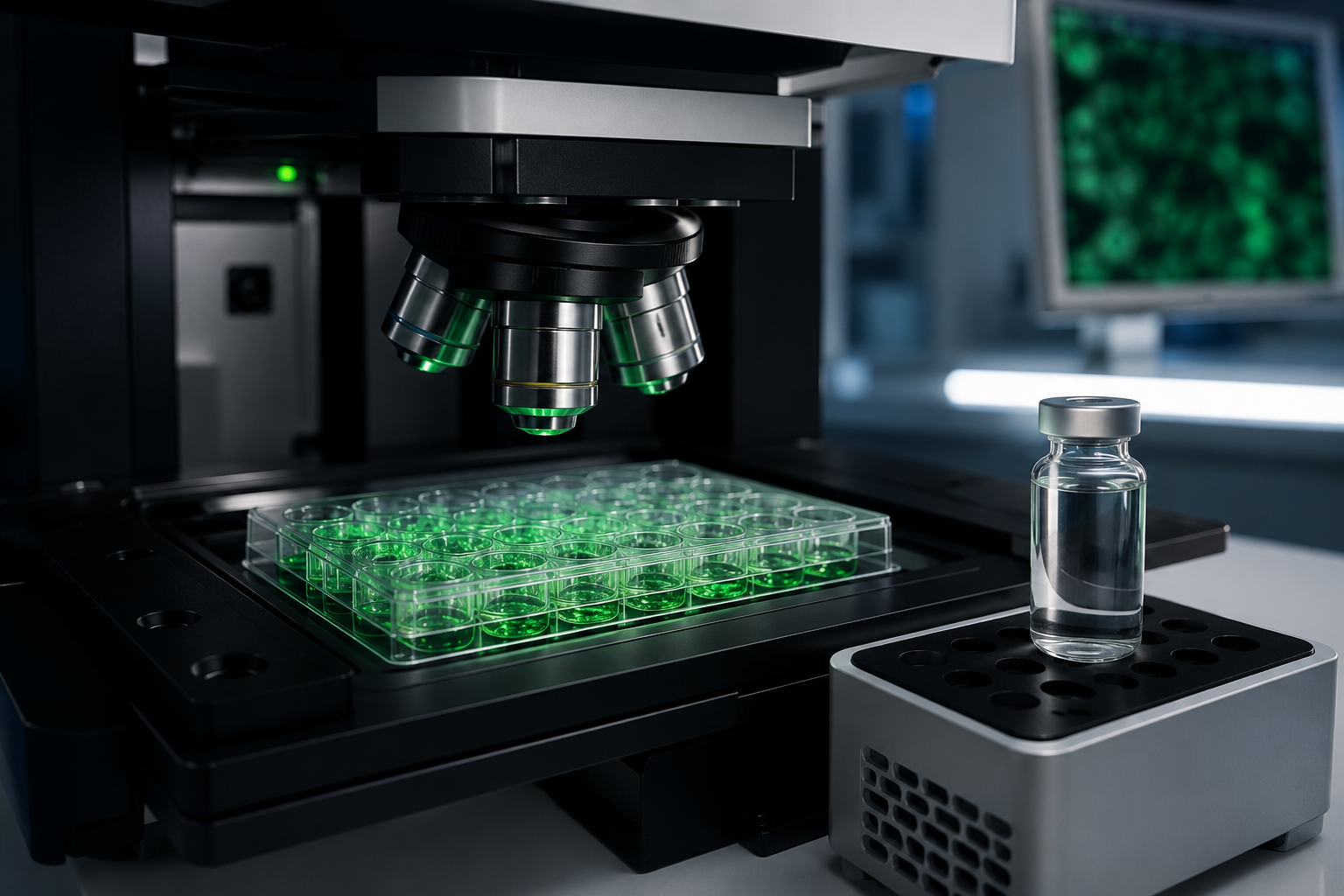
The concentrations and quantities reported vary depending on the experimental model: micromolar concentrations in cell culture, doses adjusted for weight and route (oral, topical, systemic) in animal models. These values are specific to each preclinical protocol and do not, under any circumstances, constitute a dosage transposable to humans.
Disclaimer: this content is provided for informational purposes strictly within a laboratory research context (research use only). It does not constitute medical advice, a recommendation for use, or a human administration protocol. No therapeutic claim is made.
Summary
KPV is a tripeptide derived from the C-terminal end of α-MSH, studied for its anti-inflammatory activity dissociated from the hormonal effects of its parent molecule. Preclinical research highlights modulation of the NF-κB and MAPK pathways, intestinal uptake via PepT1, and promising results in models of intestinal and cutaneous inflammation. This data nonetheless remains experimental: it feeds basic research without establishing validated human use.