Few peptidomics-derived molecules attract as much laboratory attention as BPC-157. This peptide fragment, isolated from gastric juice, has been the focus of several experimental pharmacology teams for more than thirty years. At NEXUS Biohacking Research, we present it within a strictly research use only framework: the following lines summarize the state of the scientific literature, with no medical intent or recommendation for human use whatsoever.
What is BPC-157?
The acronym BPC stands for Body Protection Compound. BPC-157 is a pentadecapeptide, meaning a chain of fifteen amino acids, with the following sequence: Gly-Glu-Pro-Pro-Pro-Gly-Lys-Pro-Ala-Asp-Asp-Ala-Gly-Leu-Val. It corresponds to a partial fragment of a larger protein identified in human gastric juice, hence its nickname as a "gastric" peptide.
Its physicochemical characteristics are well established: molecular formula C62H98N16O22, molecular mass of approximately 1419 Da (≈ 1419.56 g/mol), and CAS number 137525-51-0.
A notable feature, documented in preclinical pharmacokinetic studies, is its unusual stability: unlike many peptides, BPC-157 resists enzymatic hydrolysis relatively well and remains stable within the acidic environment of gastric juice. This robustness makes it a subject of particular interest for understanding cellular protection.
Studied mechanism of action
Mechanistic work converges on one central axis: the modulation of angiogenesis, i.e., the formation of new blood vessels.
A study published in Scientific Reports (2020), combining ex vivo assays on rat aortic rings with in vitro assays on human endothelial cells (HUVEC), detailed a precise signaling pathway. BPC-157 was reported to induce phosphorylation of Src kinase, subsequently activating caveolin-1, which releases endothelial nitric oxide synthase (eNOS) from its inhibited state. The observed result is increased nitric oxide (NO) production and endothelium-dependent vasodilation.
In parallel, several publications report overexpression and activation of the VEGFR2 receptor (vascular endothelial growth factor receptor), a key player in endothelial cell migration. Some studies also point to regulation of FAK-paxillin complexes (involved in cell adhesion and migration) and modulation of growth hormone receptor expression in tendon fibroblasts. These mechanisms remain working hypotheses, described mostly in cellular and animal models.
Research domains
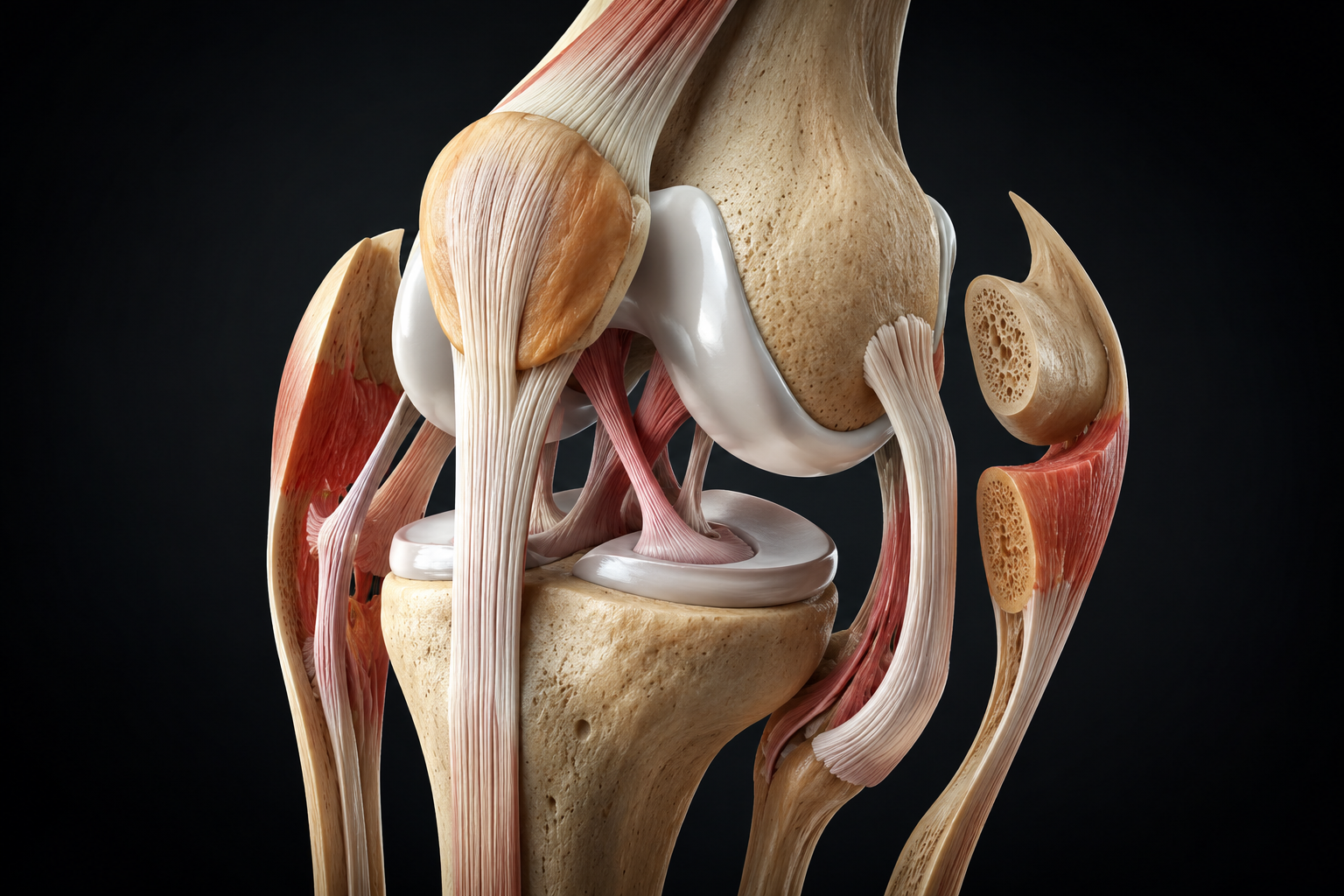
The preclinical literature explores BPC-157 across several tissue axes: tendons and ligaments (rat tendon-injury models make up the core of the publications, with observations on fibroblast migration and collagen organization); the digestive mucosa (given its gastric origin, the peptide is extensively studied in gastrointestinal injury models and along the gut-brain axis); and connective and musculoskeletal tissues (muscle, bone-tendon junction, recovery after injury in animal models).
What the literature shows
It is essential to be transparent about the nature of the evidence. The overwhelming majority of available data is preclinical, derived from in vitro studies (cell cultures) and in vivo studies in rodents, primarily rats.
In these models, publications report an apparent acceleration of repair processes, improved cell survival and migration, and effects on angiogenesis. A 2025 review in Pharmaceuticals (MDPI) on tendon and muscle tissue nonetheless concludes that human data are limited and that definitive clinical validation is still pending.
In short: to date, no large-scale, randomized, controlled human clinical trial has demonstrated efficacy. A few rare, small, heterogeneous preliminary human studies are mentioned, but they do not allow for any solid conclusions.
Effects and limitations observed in research
Preclinical pharmacokinetic data (rats and dogs) provide useful insight. The elimination half-life is very short — on the order of a few minutes following intravenous administration in the models described. The peptide distributes rapidly (kidneys, liver, gastric wall) and is then metabolized into short peptide fragments and amino acids.
The main scientific limitation lies in the translational gap: what is observed in rodents in no way predicts an effect in humans. An important caveat is regularly raised: since angiogenesis can feed tumor tissue, a pro-angiogenic effect raises a theoretical safety question that remains unresolved. Finally, BPC-157 appears on the World Anti-Doping Agency (WADA) list of prohibited substances and has received no regulatory approval for human use.

Reconstitution and storage
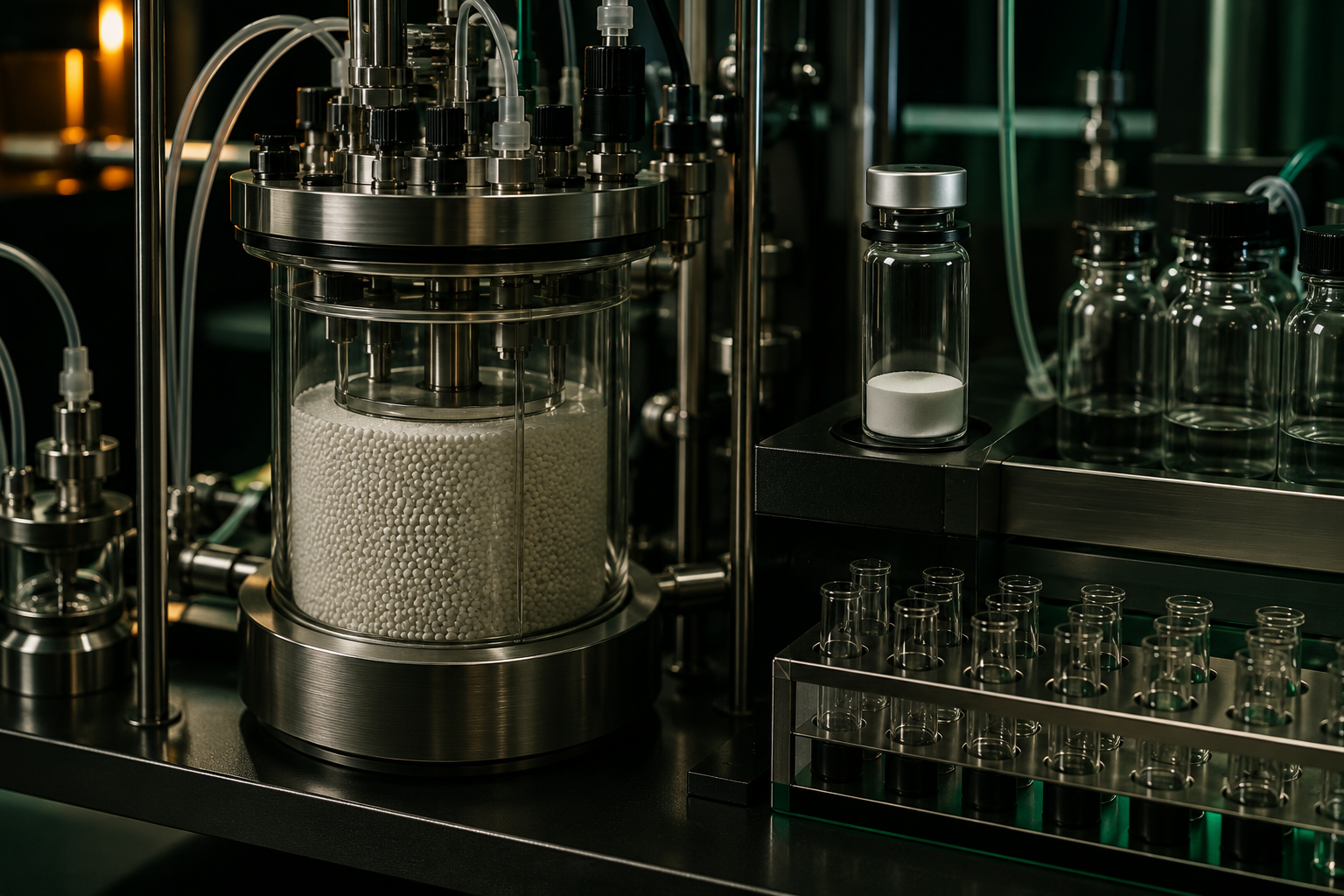
For research purposes, BPC-157 is supplied as a lyophilized powder. Commonly described laboratory handling practices include reconstitution with a suitable solvent (bacteriostatic or sterile water), added slowly down the wall of the vial without vigorous shaking; storage of the lyophilized powder refrigerated or frozen, protected from light and moisture (stable for many months); and a reconstituted solution kept refrigerated (2–8 °C) and used within a short time frame, as stability in solution is more limited. These points pertain to laboratory sample handling, not human use.
Doses used in studies
To provide a sense of scale strictly for documentary purposes, preclinical pharmacokinetic studies administered, in animal models, doses on the order of a few micrograms per kilogram via intravenous or intramuscular routes (for example, 20 µg/kg in rats). These are doses studied in the literature, in animal models, within a controlled experimental context.
Disclaimer: these values are provided solely to aid understanding of published research. They do not constitute a protocol, a dosage regimen, or a recommendation for human use. BPC-157 is intended exclusively for laboratory research (research use only) and is not approved for therapeutic use.
In summary
BPC-157 is a stable pentadecapeptide derived from gastric juice, whose studied mechanisms (VEGFR2-mediated angiogenesis, the Src-caveolin-1-eNOS pathway, nitric oxide) make it a fascinating research candidate for tissue repair. But scientific honesty demands a clear conclusion: the solid data are preclinical and animal-based, human trials are lacking, and safety questions remain open. It should be handled for what it is: a research tool.