In the world of research peptides, blends are attracting growing interest because they combine, in a single vial, several molecules with complementary mechanistic profiles. The GLOW-70 blend is an emblematic example. It brings together three peptides widely studied in tissue regeneration research: GHK-Cu, BPC-157, and TB-500. This article offers an educational synthesis of what the scientific literature describes about this trio, within a strictly "research use only" framework (laboratory use only). No medical claims, human protocols, or human dosing advice are included.
What is the GLOW-70 blend?
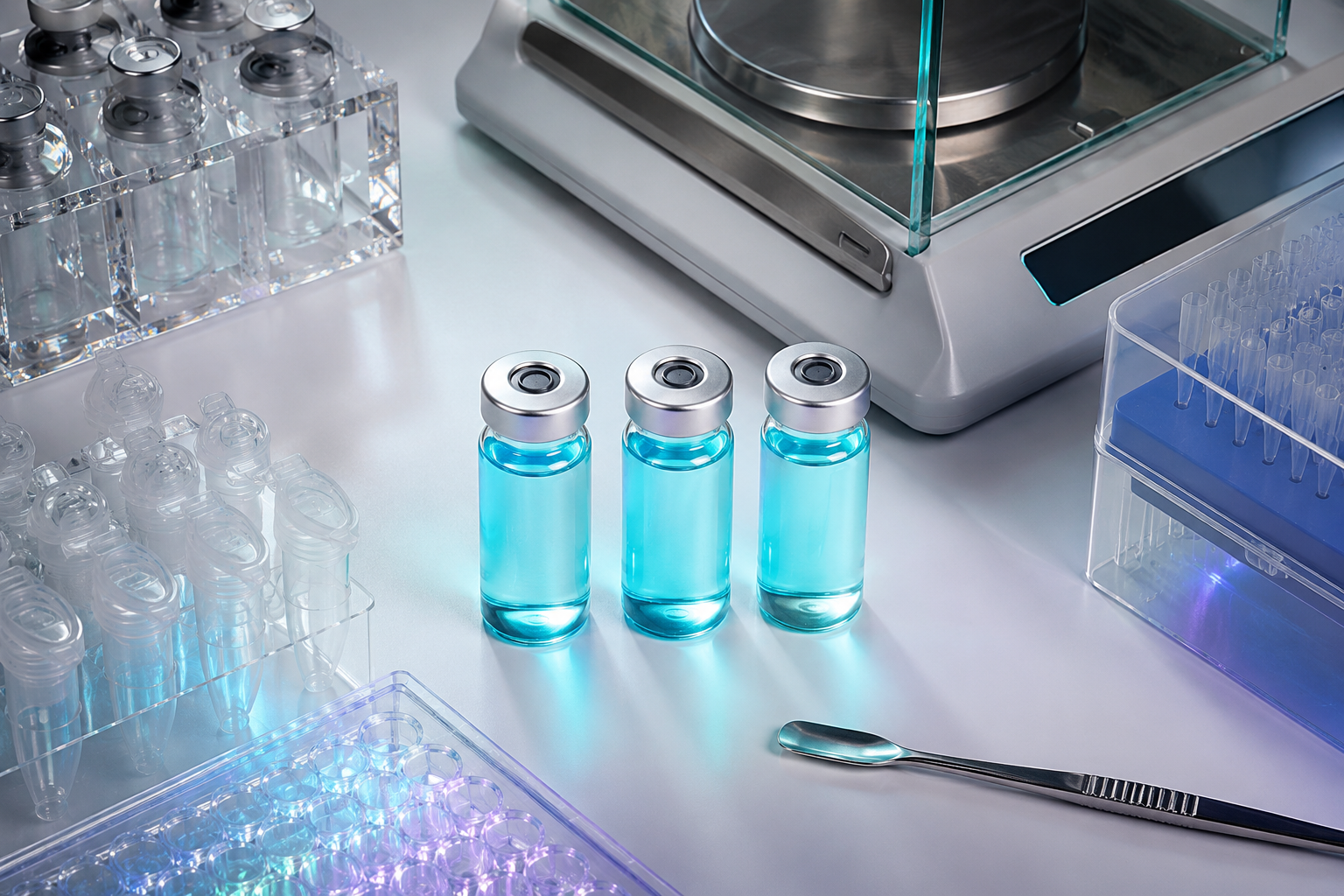
The name "GLOW-70" refers to the total peptide mass contained in a research vial: 70 mg, typically distributed as GHK-Cu (50 mg) + BPC-157 (10 mg) + TB-500 (10 mg). This composition, found across several research material suppliers, explains the "GLOW" nickname, referencing the dominant study areas: skin, extracellular matrix, and tissue repair.
The underlying idea behind the blend is the complementarity of the studied targets. GHK-Cu is primarily explored for collagen synthesis and modulation of cutaneous gene expression; BPC-157 for indirect angiogenesis and connective tissue healing; TB-500 for cell migration via actin regulation. Combined, they constitute an interesting object of study for preclinical models of regeneration.
The components: GHK-Cu, BPC-157, TB-500
GHK-Cu is a tripeptide (glycyl-L-histidyl-L-lysine) complexed with a copper ion. Naturally present in human plasma, its concentration decreases with age. It is one of the most well-documented copper peptides in skin biology.
BPC-157 is a pentadecapeptide (15 amino acids) derived from a gastric protein sequence. Preclinical literature is primarily interested in it for the healing of tendons, ligaments, muscles, and digestive mucosa.
TB-500 is a synthetic fragment of thymosin beta-4, a protein involved in cytoskeletal dynamics. It is studied for its role in cell migration and repair.
Mechanisms under study
The three molecules act on distinct but convergent pathways in repair models.
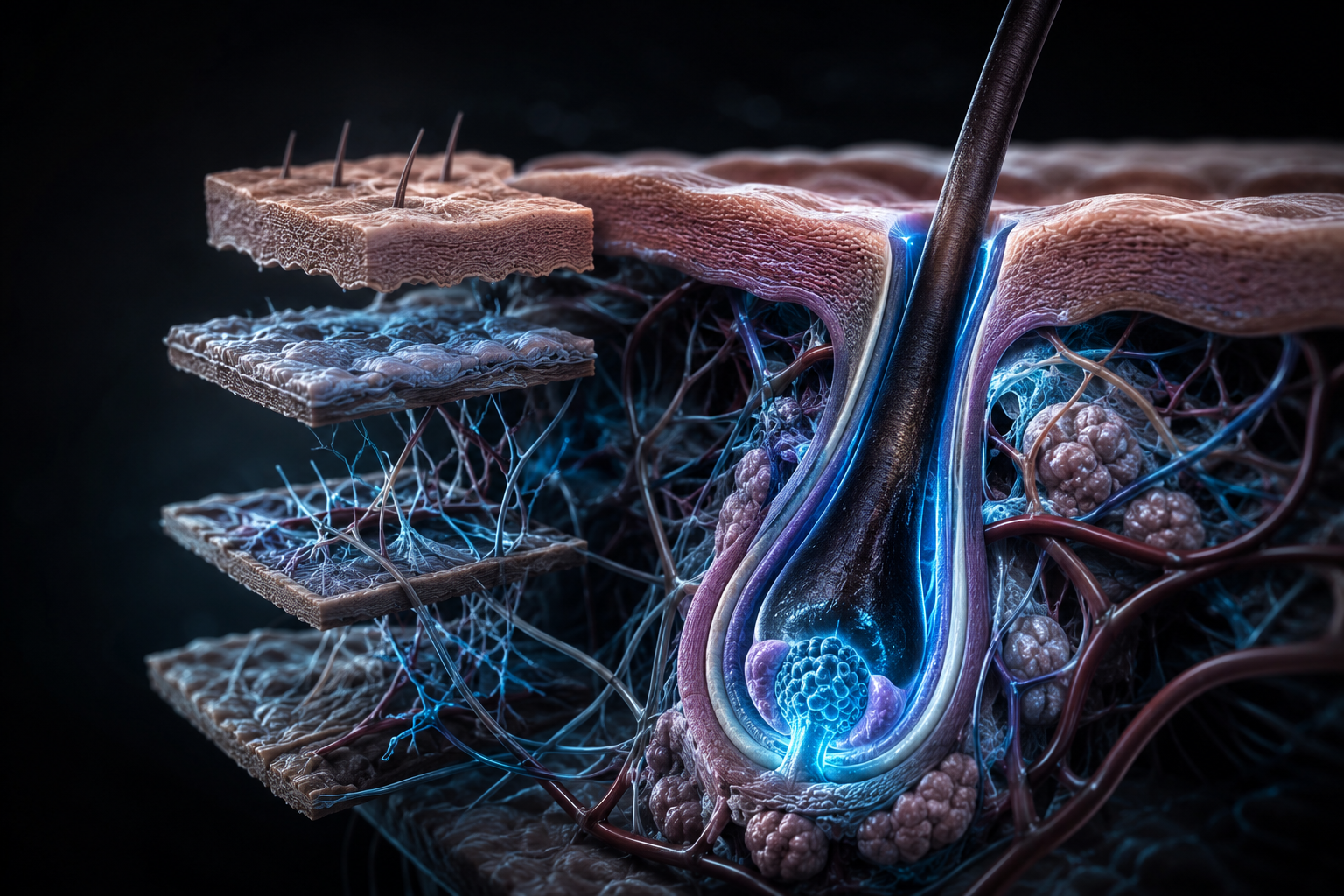
GHK-Cu modulates gene expression: a large-scale analysis described a change in the expression of a large number of human genes, including many genes related to extracellular matrix composition, in fibroblast cultures. It is also described as stimulating the secretion of growth factors (bFGF, VEGF) and as possessing antioxidant properties in vitro.
BPC-157, in rodent studies, shows no direct angiogenic effect on cell cultures, but promotes angiogenesis in vivo by upregulating VEGF expression during muscle and tendon healing.
TB-500 acts as a G-actin-binding protein: by keeping actin in its monomeric form, it is thought to facilitate the polymerization required for cell motility, and thus the migration of fibroblasts, keratinocytes, and endothelial cells.
Areas of research
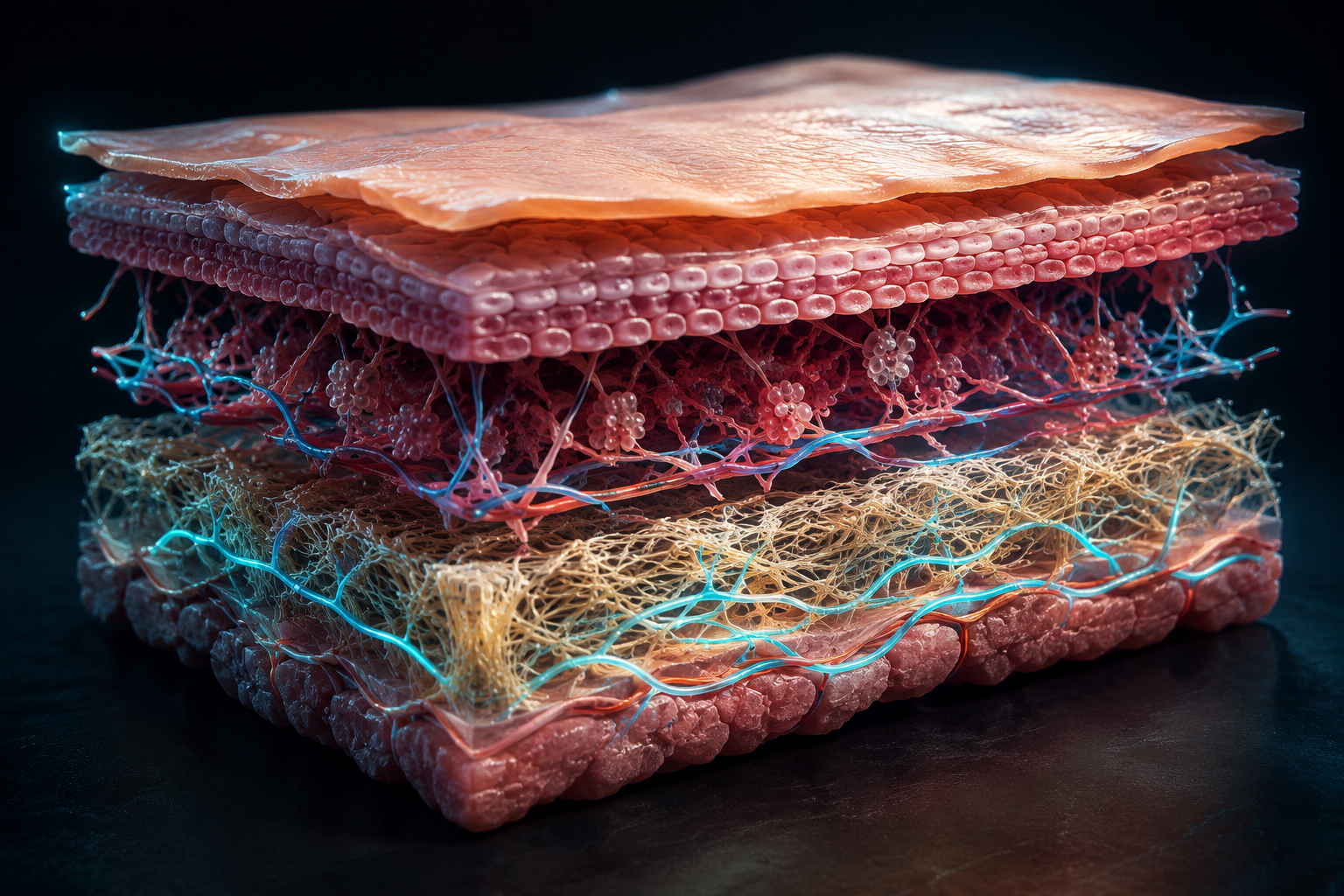
The blend's areas of study overlap with those of its components: skin and the extracellular matrix (synthesis of collagen, elastin, and glycosaminoglycans, mainly GHK-Cu); connective tissue repair (models of tendon, ligament, and muscle injury, BPC-157 and TB-500); angiogenesis (formation of new vessels, a condition for proper healing, via VEGF or endothelial migration); and cell migration and remodeling (actin dynamics, TB-500).
What the literature shows
It is essential to distinguish the type of study behind each claim.
GHK-Cu: the evidence base is predominantly in vitro (fibroblasts, keratinocytes) and animal-based (wound models in rodents and rabbits). Studies describe accelerated healing and remodeling of the extracellular matrix. Human skin data comes mainly from topical cosmetic research.
BPC-157: nearly all data is preclinical (primarily Wistar rats), focusing on induced injuries of tendons, muscles, and the digestive tract. Controlled human studies remain very limited.
TB-500 / thymosin beta-4: publications describe accelerated skin and corneal healing, cardiac repair, and reduced scar formation in animal models. Here again, human clinical data are scarce compared to the preclinical literature.
Effects and limitations observed in research
The signals observed are encouraging but come with significant limitations. The vast majority of results come from cellular and animal models, whose extrapolation to humans has not been established. Protocols vary (routes of administration, doses, durations), which complicates comparisons. For blends specifically, there is no literature evaluating the interactions between the three peptides administered together: the effects described remain those of each molecule in isolation. Finally, purity standardization and reproducibility are critical variables in research.
Reconstitution & storage
In a laboratory context, lyophilized peptides are generally reconstituted with bacteriostatic water (containing benzyl alcohol) or sterile water, added slowly down the wall of the vial, without vigorous agitation. The lyophilized powder is typically stored in a freezer (-20°C), protected from light; once reconstituted, the solution is stored in a refrigerator (2-8°C) for a limited period. The presence of copper in GHK-Cu often gives the solution a characteristic blue tint. These handling practices fall under good laboratory practice and in no way constitute preparation for human use.
Doses used in studies
In the preclinical literature, BPC-157 has frequently been tested in rodents at doses on the order of a microgram, or even a nanogram, per kilogram of body mass. TB-500 and thymosin beta-4 have been evaluated in ranges on the order of a milligram per kilogram depending on the model. GHK-Cu has been studied in vitro at very low concentrations (on the order of 10⁻⁹ mol/L) and in topical application at variable percentages.
Disclaimer: these values correspond to doses studied in the animal and in vitro literature. They do not constitute a recommendation, a protocol, or a dosage transposable to humans. These products are intended exclusively for laboratory research ("research use only"), not for human consumption.
Summary
The GLOW-70 blend brings together three of the most widely studied peptides in tissue regeneration: GHK-Cu (extracellular matrix and gene expression), BPC-157 (indirect angiogenesis via VEGF, connective tissue repair), and TB-500 (cell migration through actin regulation). The available literature is rich but essentially preclinical; controlled human data and studies on the combined blend are lacking. GLOW-70 remains an object of laboratory study, to be handled within a research-use-only framework, with no medical or human purpose whatsoever.