Among the peptides studied for their role in cellular dynamics, TB-500 occupies a distinctive place. A synthetic derivative of a protein naturally present in almost all living organisms, it has drawn the attention of laboratories working on cell migration, tissue repair, and cytoskeletal organization. This article offers a scientific synthesis of the available literature, strictly within the context of laboratory research (research use only). None of the information below constitutes a medical claim or a protocol intended for human use.
What is TB-500?
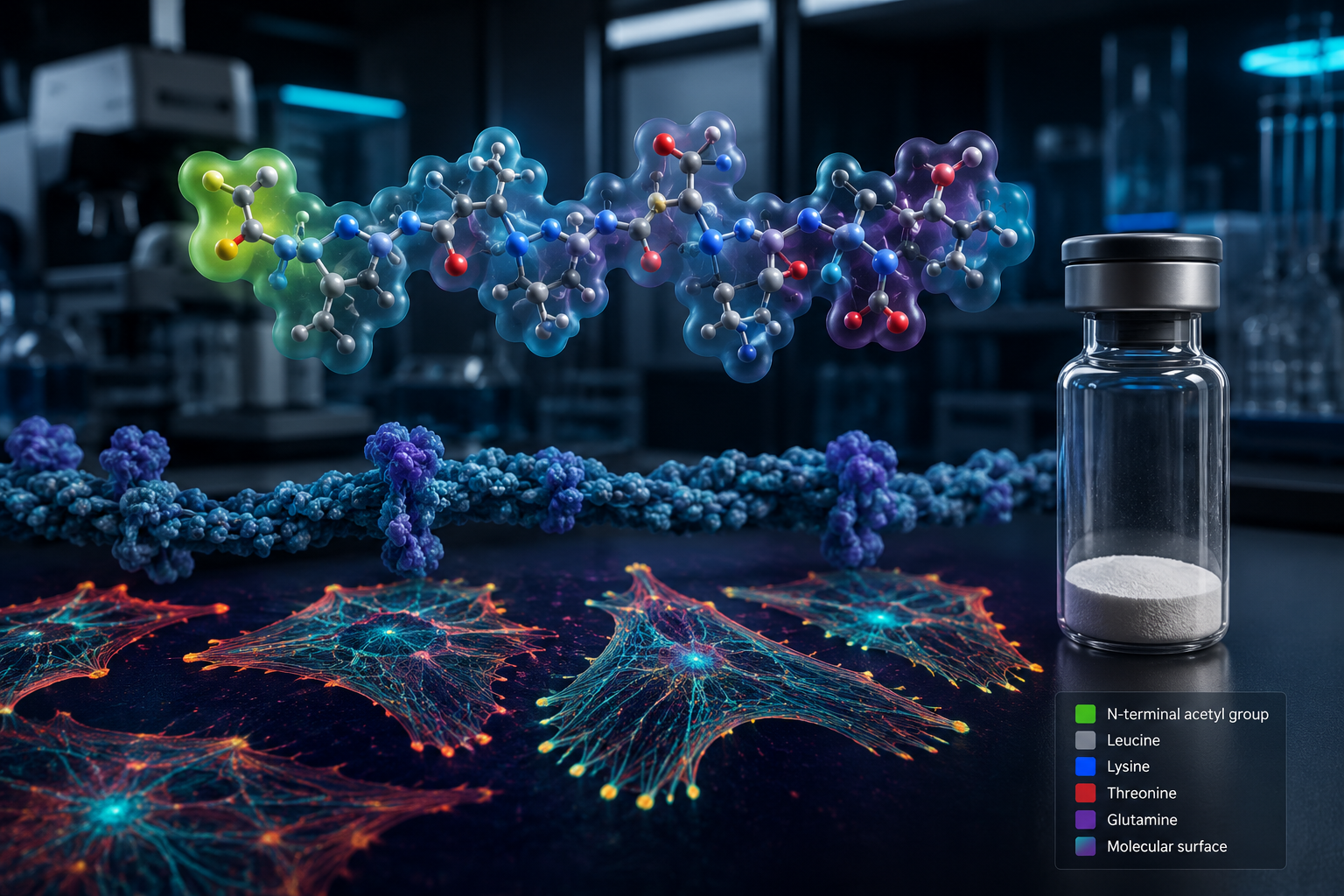
TB-500 is a synthetic fragment of Thymosin β4 (Tβ4), an endogenous 43-amino-acid protein (molecular mass of approximately 4,921 Da, CAS No. 77591-33-4). Thymosin β4 is one of the most abundant actin-binding peptides in the cytoplasm and is found across a wide range of tissues.
Within this protein, a short central region — the LKKTET sequence (residues 17 to 22) — has historically been identified as the primary motif for actin interaction. TB-500 corresponds to a short peptide reproducing this active region, generally described in acetylated form. It is worth noting a frequent ambiguity in the literature and in the research market: some products labeled "TB-500" actually correspond to full-length Thymosin β4 rather than to the fragment alone. This distinction matters when comparing experimental results, since the complete molecule possesses functions that the isolated fragment does not necessarily reproduce in full.
Mechanism of action under study
The best-characterized mechanism of Thymosin β4 is the sequestration of monomeric actin (G-actin). By binding these monomers, the protein forms a mobilizable reserve and modulates the balance between free actin and actin polymerized into filaments (F-actin). This control over polymerization directly influences cytoskeletal reorganization.
The actin cytoskeleton, in turn, is the engine of cell migration. In laboratory settings, Thymosin β4 has been associated with increased mobility in several cell types — keratinocytes, endothelial cells, myoblasts. In vitro studies report stimulation of keratinocyte migration at very low concentrations.
A third area under investigation is angiogenesis: across several models, the peptide has promoted endothelial cell migration and the formation of vascular structures. Additional effects have been described in the literature, including modulation of the inflammatory response and an influence on adhesion molecules. These mechanisms remain experimental observations and not clinically validated properties.
Areas of research
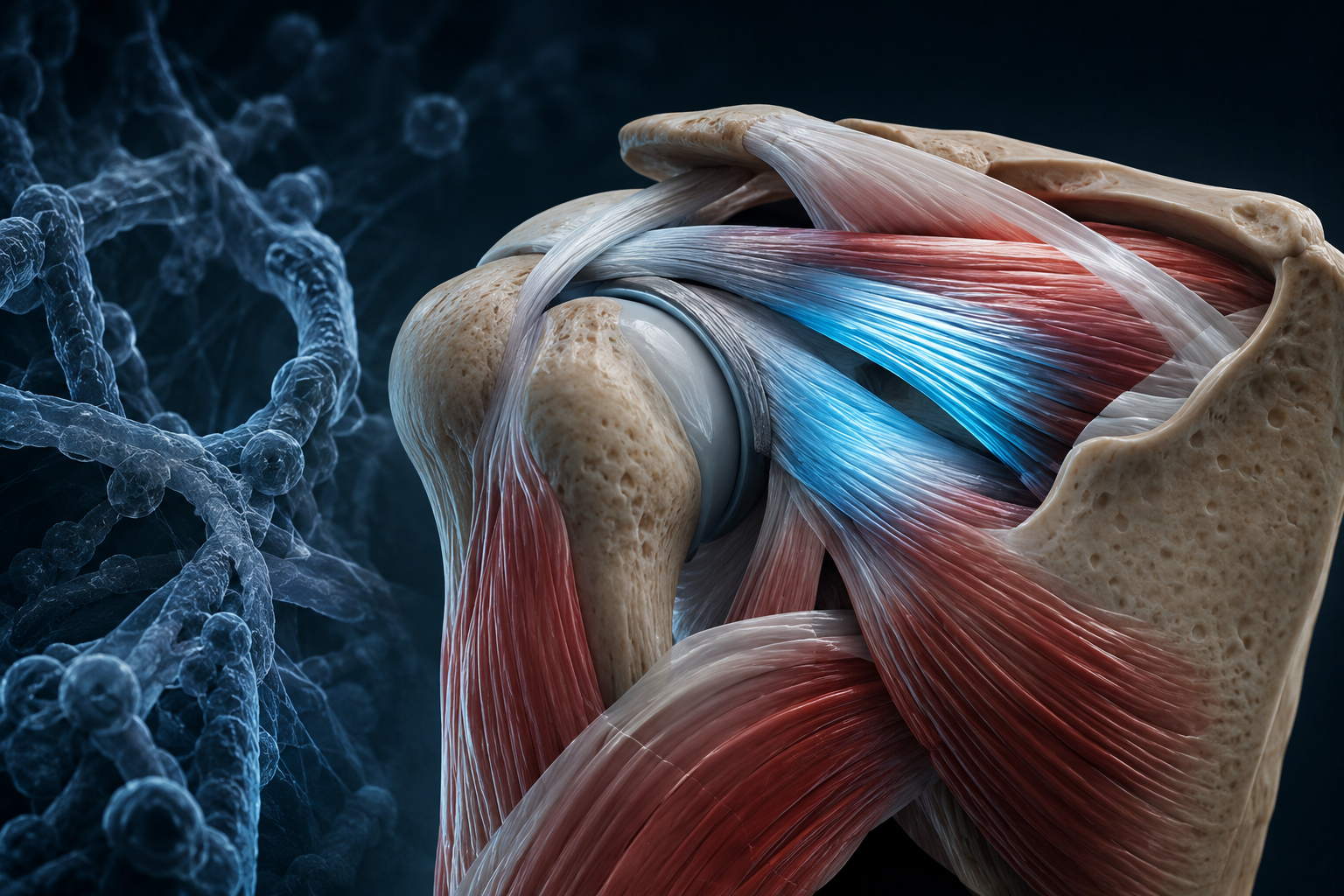
Three major fields of investigation stand out: muscle and tendon repair (the mobilization of progenitor cells and actin dynamics place the peptide within studies on the healing of contractile and connective tissues); the heart (Thymosin β4 has been the subject of work on cardiomyocyte survival and revascularization following ischemic injury in animal models); and the cornea (healing of the corneal epithelium and anti-inflammatory effects following injury).
What the literature shows
Nearly all available data comes from preclinical studies: cell cultures (in vitro) and animal models (in vivo, primarily rodents).
In cardiac models, a study published in Nature (Bock-Marquette et al., 2004) reported, in mice, improved cardiomyocyte survival and stimulated coronary vascular growth following experimental infarction. In corneal models, the work of Sosne et al. documented, in rodents, accelerated corneal healing and reduced inflammation following chemical injury. In muscle models, one study described Thymosin β4 as a chemoattractant for myoblasts following injury.
Note: the full-length molecule (Tβ4) has been the subject of human clinical trials, for example in eye-drop form evaluated for dry eye disease and neurotrophic keratopathy. These trials concern the complete protein and do not involve the isolated TB-500 fragment, which has not followed this clinical path.
Effects and limitations observed in research
The publications converge on a "pro-migratory" and "pro-regenerative" profile in experimental models. The limitations, however, are clear: heterogeneity among the molecules tested (fragment vs. full-length protein), variability in doses and routes of administration, difficult extrapolation from animal to human, and the absence of clinical trials dedicated to the fragment itself. Most of the reported effects remain experimental signals requiring confirmation.
Reconstitution & storage
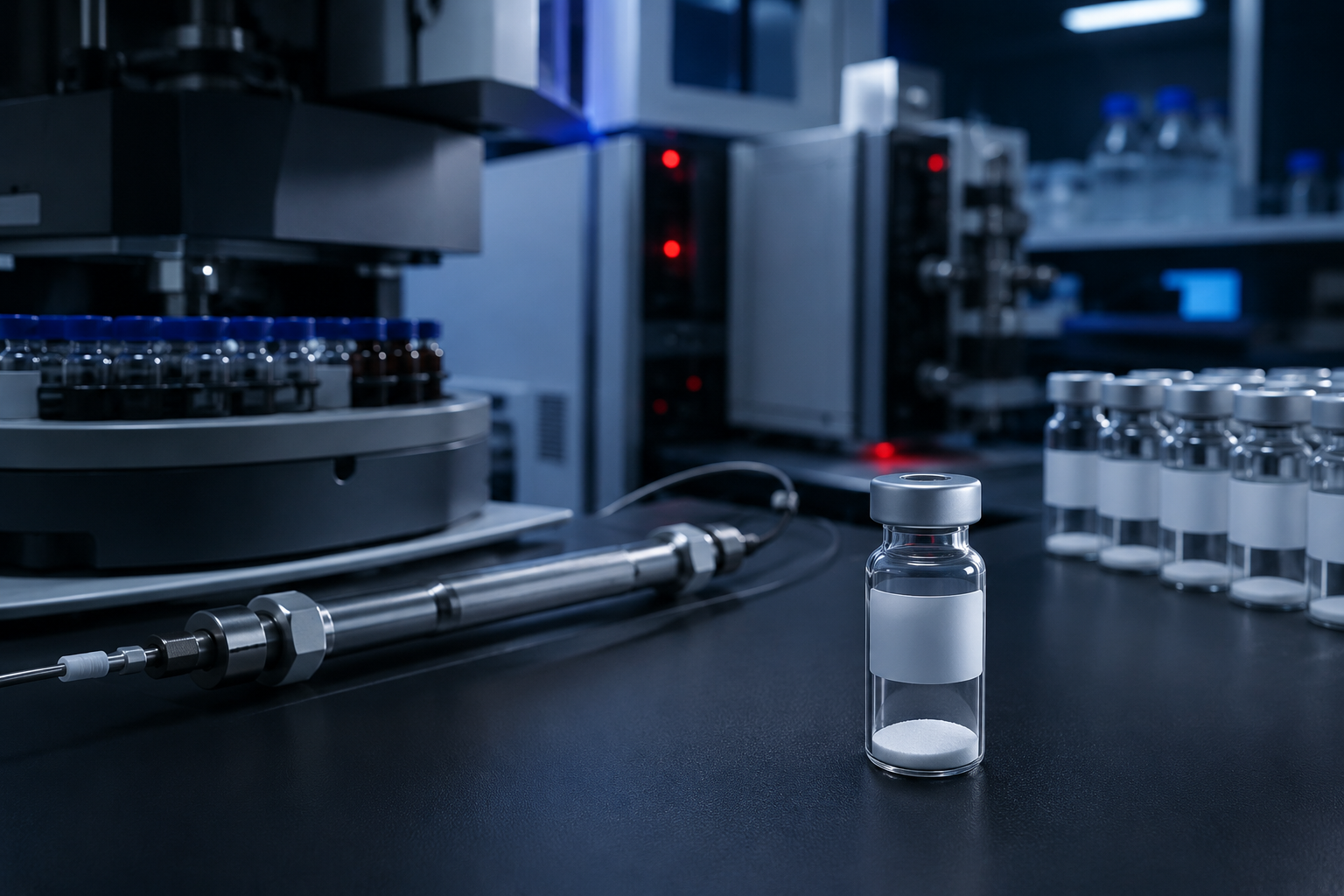
In a research context, the peptide is generally supplied in lyophilized form. Commonly described laboratory practices include storing the lyophilized powder in the freezer (around -20 °C), protected from light and moisture; reconstituting with bacteriostatic water or a compatible solvent, added slowly along the wall of the vial without vigorous agitation; and storing the reconstituted solution in the refrigerator (2-8 °C) for a limited period, avoiding repeated freeze/thaw cycles.
Doses used in studies
The quantities reported in the literature are expressed as doses studied in preclinical models: micro- to nanomolar concentrations in cell culture, or amounts reported relative to body weight in animal models. These values are neither transposable nor interpretable as recommendations. No human dosage exists for the TB-500 fragment.
Disclaimer: this information is provided for documentary purposes, strictly within a laboratory research context, and does not under any circumstances constitute an indication for use in humans or animals outside a regulated protocol.
Summary
TB-500 is a synthetic fragment reproducing the actin-binding motif of Thymosin β4. Research is focused on its role in cytoskeletal dynamics, cell migration, and angiogenesis, with data drawn primarily from in vitro and animal models. Promising as a research tool, it remains a subject of investigation: dedicated clinical evidence is lacking, and any handling falls strictly within an experimental framework.