For a long time regarded as mere powerhouses of the cell, mitochondria are increasingly understood to also act as signaling organelles. One of the most intriguing discoveries of the past decade is that of mitochondrial-derived peptides (MDPs), of which Mitochondrial Open (TS-c) is the most extensively studied representative. A subject of growing interest in metabolism and aging research, this peptide is drawing attention from laboratories working on cellular signaling. This article offers a synthesis of current scientific knowledge, presented strictly for documentary purposes and intended for research use only ("research use only").
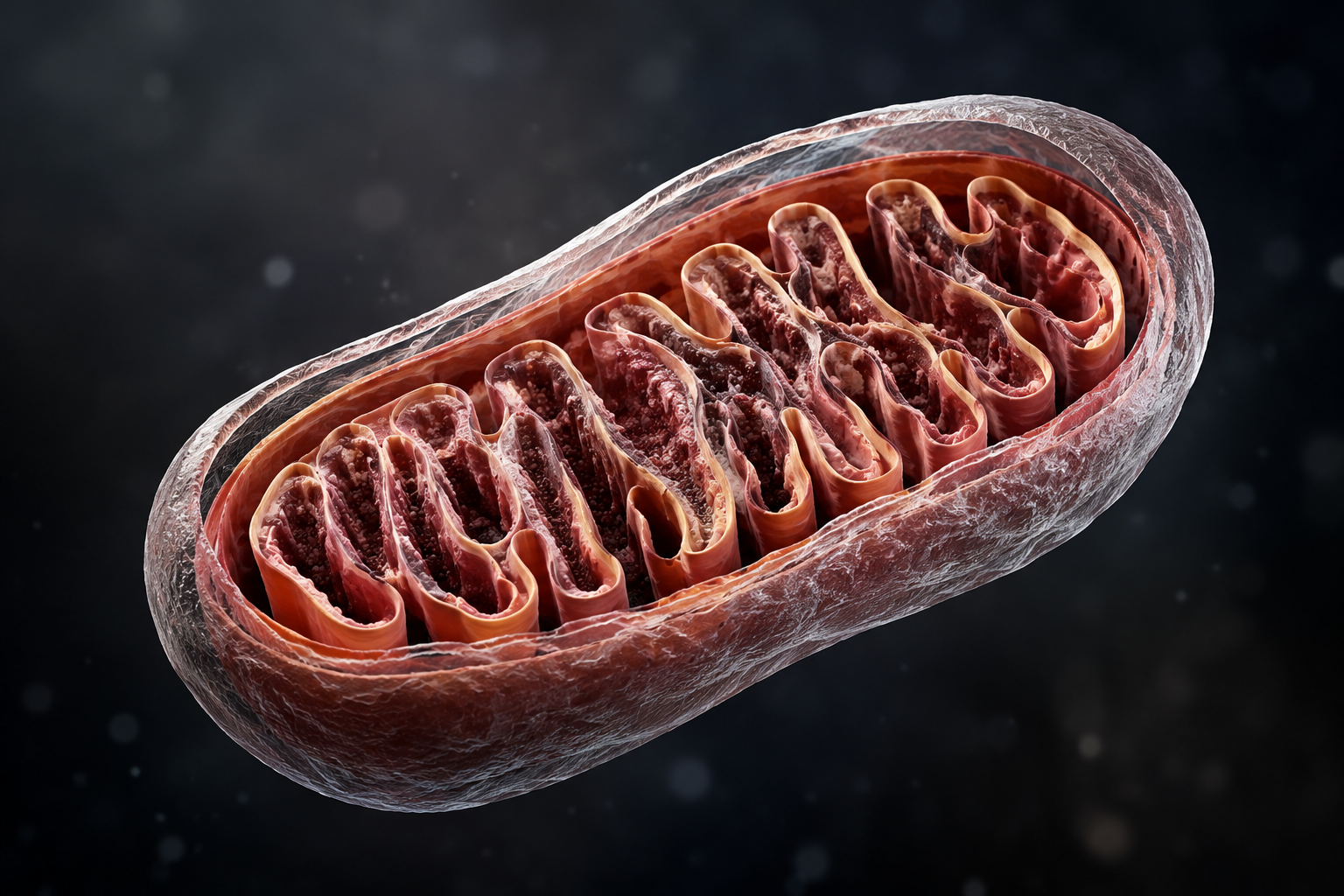
What is Mitochondrial Open (TS-c)?
Its name describes its origin. It is a short peptide composed of 16 amino acids, notable for being encoded not by the nucleus but by an open reading frame located within the 12S ribosomal RNA gene region of the mitochondrial genome — hence "12S" and "type-c". This origin makes it a member of the mitochondrial-derived peptide family.
Its peptide sequence is Met-Arg-Trp-Gln-Glu-Met-Gly-Tyr-Ile-Phe-Tyr-Pro-Arg-Lys-Leu-Arg, with a molecular weight of approximately 2,174 g/mol. Detectable in the bloodstream, TS-c is among the molecules whose circulating levels, according to observational data, appear to decline with age, a finding that has fueled the hypothesis of a link to metabolic senescence.
Studied Mechanism of Action
The most well-documented mechanism of TS-c centers on activation of AMPK (AMP-activated protein kinase), a central regulator of cellular energy metabolism. The seminal work of Lee and colleagues (Cell Metabolism, 2015) suggests that this activation is indirect: the peptide appears to interfere with the folate-methionine cycle and one-carbon metabolism, leading to an accumulation of AICAR, a purine synthesis intermediate known to activate AMPK.
Under conditions of metabolic stress, TS-c displays another remarkable property: its translocation to the nucleus. Although it lacks a classical nuclear localization signal, this movement appears to occur in an AMPK-dependent manner. Once in the nucleus, it may modulate the expression of genes involved in the stress response and metabolic homeostasis. Studies also report, within hours of exposure, changes in the cellular metabolic profile, including variation in purine metabolism metabolites and increased fatty acid beta-oxidation.
Areas of Research
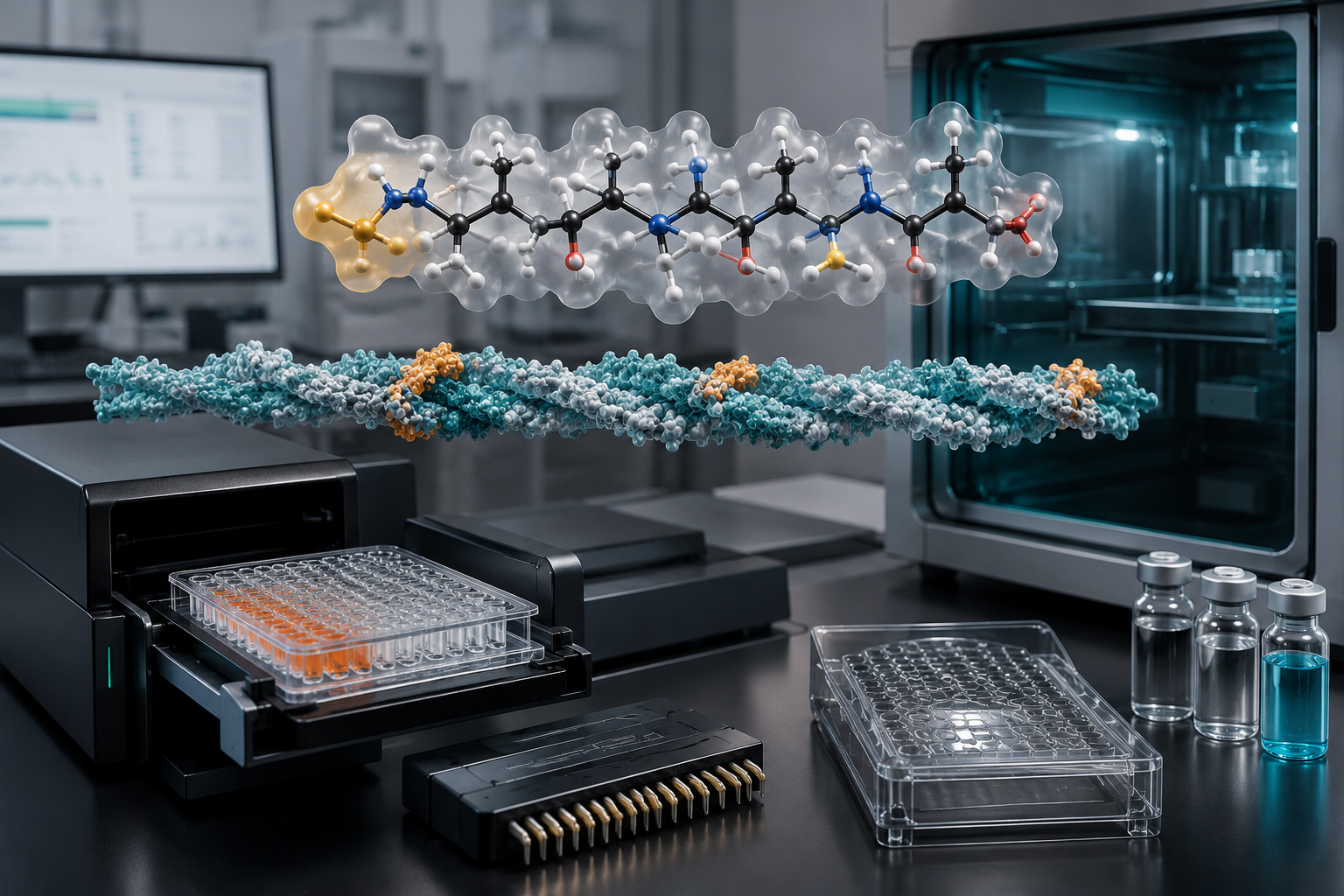
TS-c is studied across several complementary research directions: glucose metabolism (an observed capacity to increase glucose uptake and clearance in skeletal muscle, identified as the primary target tissue); insulin sensitivity (interest in models of insulin resistance and diet-induced obesity); exercise and physical performance (TS-c is described as an "exercise-inducible" peptide, with levels rising following exertion); and longevity and aging (a possible role in age-related functional decline and muscle homeostasis).
What the Literature Shows
It is essential to clarify the nature of the available evidence. The bulk of the data comes from preclinical studies: in vitro cell cultures and in vivo murine models.
In the 2015 work, mice fed a high-fat diet and treated with TS-c showed an improved metabolic profile. A study published in Nature Communications (Reynolds et al., 2021) reported that treated aged mice ran markedly longer and farther on treadmill tests than control animals, with improved physical capacity. Regarding insulin sensitivity, middle-aged mice, in certain protocols, showed muscle insulin responses approaching those of younger animals.
On the human side, data remain observational (measurements of circulating levels, correlations with age and exercise). No therapeutic conclusions can therefore be drawn for humans.
Effects and Limitations Observed in Research
Animal models suggest an improvement in metabolic flexibility and energy expenditure. However, several limitations are clearly identified in the literature. Pharmacologically, the peptide faces translational obstacles: low bioavailability, limited stability, and a short half-life. Human safety data remain insufficient, and questions of immunogenicity have been raised. These factors underscore that TS-c remains an object of scientific study, not a product validated for human use.
Reconstitution & Storage
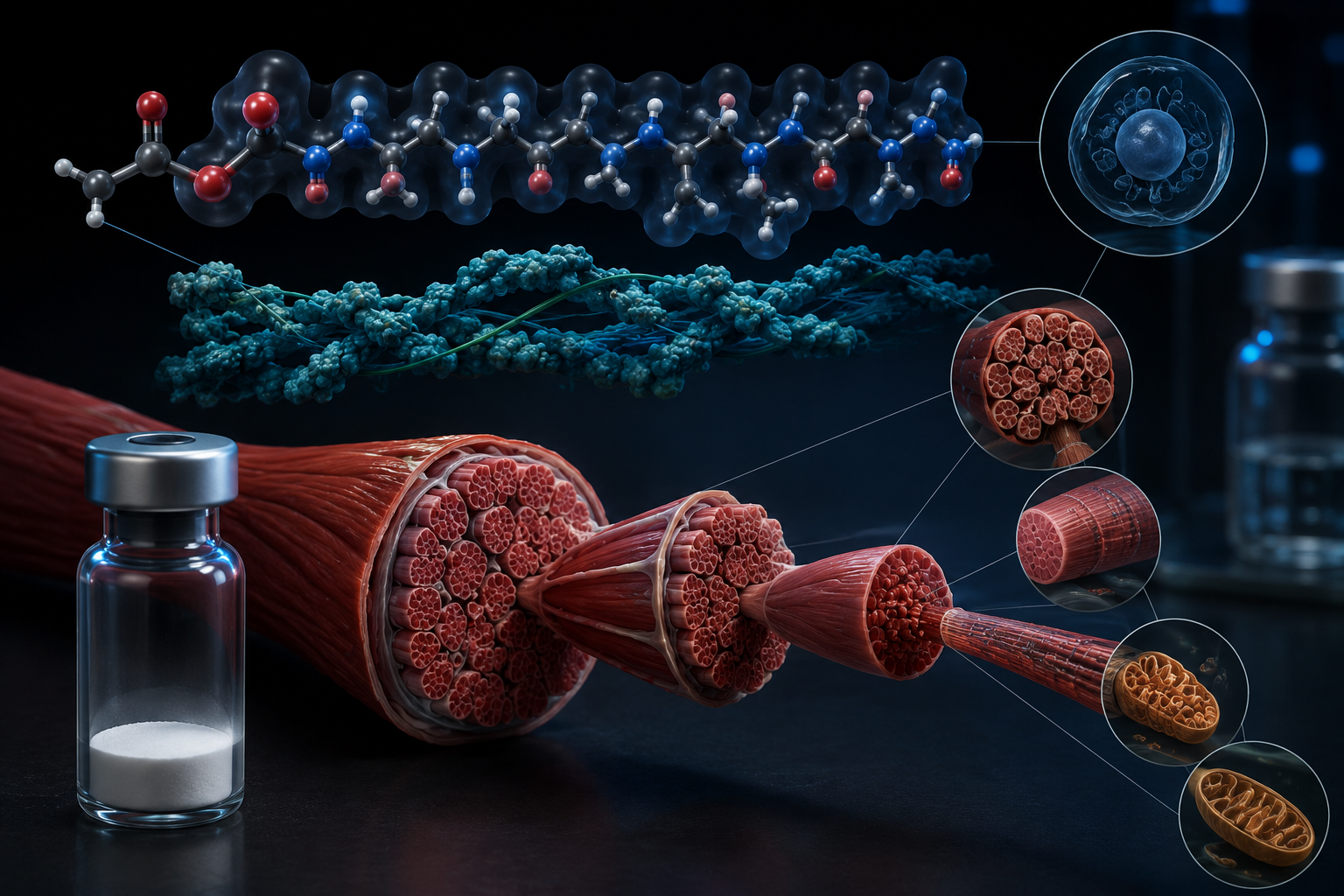
In a research setting, TS-c is generally supplied as a lyophilized powder. Good laboratory handling practice calls for storing the lyophilized product cold (typically at -20 °C), protected from light and moisture, in order to preserve the integrity of the peptide sequence.
Reconstitution is typically carried out using a suitable solvent (bacteriostatic or sterile water), poured slowly down the wall of the vial without vigorous agitation, to avoid degradation. Once reconstituted, the peptide solution is unstable and must be kept refrigerated, with a limited window for use. These procedures pertain exclusively to laboratory sample handling.
Doses Used in Studies
For purely informational and documentary purposes, the doses reported in the preclinical literature pertain to animal models, expressed per kilogram of the animal's body weight. Murine studies have used, depending on the protocol, intraperitoneal administrations on the order of a few milligrams per kilogram, at varying frequencies, over periods ranging from a few days to several weeks. These are, in every case, doses studied in animals within the context of experimental research.
Disclaimer: This information is provided for research and scientific documentation purposes only ("research use only"). It does not, under any circumstances, constitute a protocol, medical advice, or a dosing recommendation for humans. No extrapolation to human use can be made from this animal data.
In Summary
TS-c illustrates a fascinating frontier of biology: that of mitochondria capable of emitting peptide signals that regulate metabolism throughout the entire organism. Preclinical data, centered on AMPK activation, glucose metabolism, insulin sensitivity, and age-related physical function, make it a candidate of great interest for fundamental research. Nevertheless, its pharmacological limitations and the absence of robust clinical data call for the utmost caution. To date, TS-c remains a remarkable scientific investigation tool, reserved for laboratory research use.