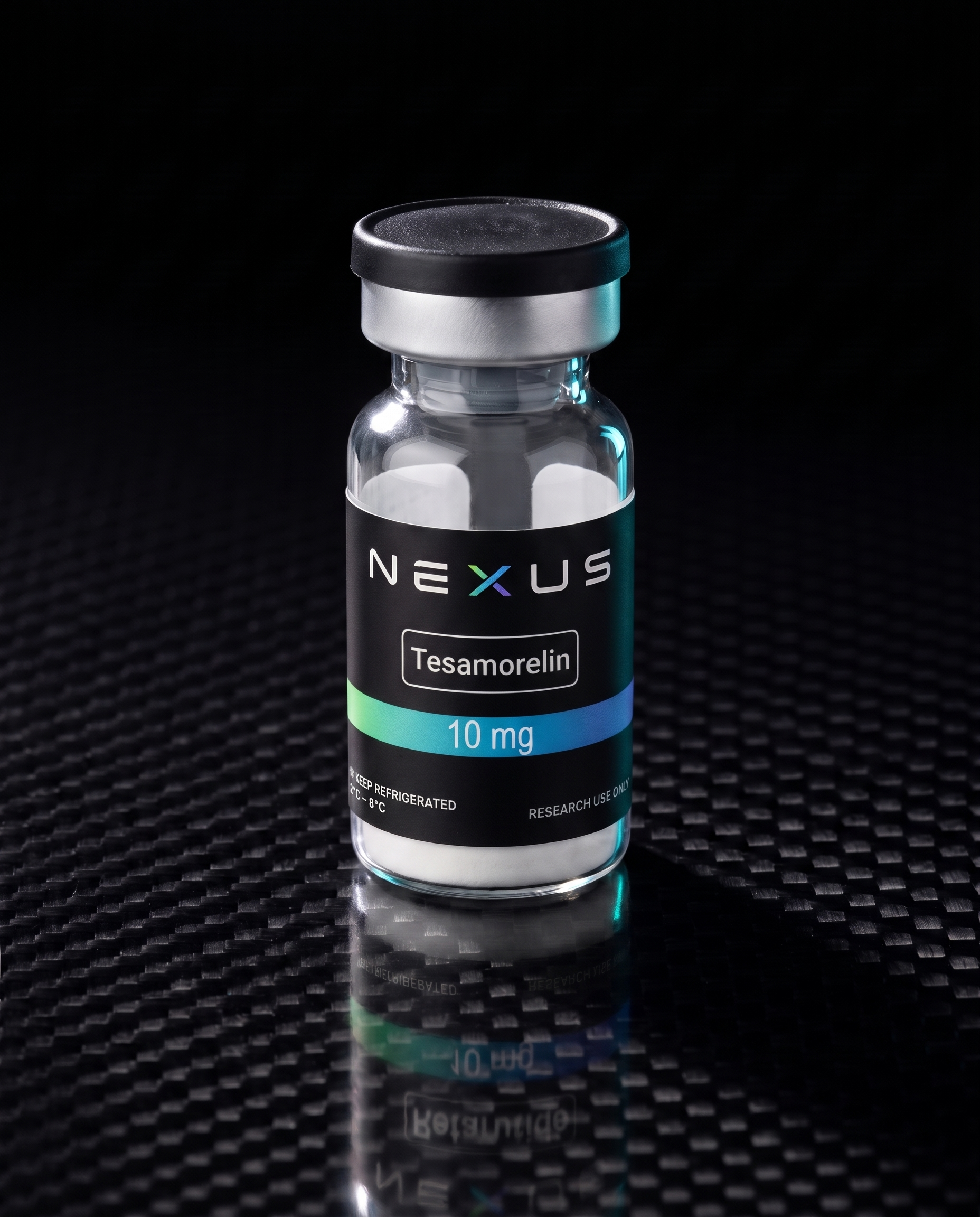
A 44-amino-acid synthetic peptide, acylated at the N-terminus by a trans-3-hexenoyl group. It is used in in-vitro work on modified long peptides and their analytical characterisation. 10 mg vial, lyophilized powder, ≥99% HPLC purity verified by third-party analysis. For laboratory research use only.
Research areas
- N-terminally modified long peptides
- In-vitro stability of acylated peptides
- Analytical characterisation (HPLC, mass spectrometry)
Technical data
| Field | Value |
|---|---|
| Name | Tesamorelin |
| Quantity per vial | 10 mg |
| Composition | 44-amino-acid peptide, N-terminal acylation (trans-3-hexenoyl) |
| Molecular weight | ≈ 5,135.9 Da |
| Form | Lyophilized powder (unless stated otherwise) |
| Purity | ≥ 99% (HPLC) — see batch COA |
| Ships from | France, within 24 h on working days |
Tesamorelin or a shorter peptide: mass settles it
This is the most frequent confusion on this reference. Tesamorelin is a 44-amino-acid chain. Markedly shorter research peptides, 29 amino acids long, are sometimes presented as equivalent. They are not: they are different molecules, and the price of a vial of one does not compare with the other.
Two checks settle it, both readable on the certificate of analysis:
| Tesamorelin | 29-residue peptides | |
| Chain length | 44 amino acids | 29 amino acids |
| Expected mass | ≈ 5,136 Da | ≈ 3.4 to 3.6 kDa |
| N-terminus | acylated (trans-3-hexenoyl) | no such group |
The trans-3-hexenoyl group sits on the first residue of the chain. It is what separates tesamorelin from the same unmodified sequence, and it shows on the mass spectrum, adding ≈ 96 Da. A spectrum whose main peak sits near 5,040 Da describes the non-acylated chain, not tesamorelin — a question for the supplier.
Why choose NEXUS tesamorelin
- Third-party verified purity: every batch is HPLC-tested by an independent laboratory, and the certificate of analysis (COA), which reports the measured mass, can be checked before ordering.
- Verifiable identity: the expected mass (≈ 5,136 Da) is on the COA — the check is done before the vial is even opened.
- Shipped from France: dispatched within 24 h on working days, delivered in 2–5 working days to France and 8 European countries. Free shipping from €120.
- Consistent quality: same supplier, same controls, same packaging from one batch to the next.
- Verified reviews: our customers leave their feedback on Trustpilot; we do not edit it.
Reconstitution and handling
The lyophilisate is reconstituted with bacteriostatic water, which contains benzyl alcohol and therefore keeps the solution preserved after opening.
Add the solvent slowly down the vial wall, let it run, then swirl gently — no vigorous shaking, no vortex, as shear denatures peptides. The solvent volume never changes the mass present in the vial, only the resulting concentration. Our reconstitution calculator gives the resulting concentration for any volume.
Storage
Lyophilized powder: -20 °C or below, protected from light and moisture; stable for years when unopened. After reconstitution: 2–8 °C, protected from light, with a reference shelf life of 28 days. For longer storage, frozen aliquots are preferable to repeated freeze-thaw cycles.
Common laboratory mistakes
- Treating tesamorelin and a 29-residue peptide as equivalent. 44 amino acids against 29, ≈ 5,136 Da against ≈ 3.4 to 3.6 kDa: they are not the same molecules.
- Accepting a COA whose main peak sits near 5,040 Da. It describes the non-acylated chain: the trans-3-hexenoyl group adds ≈ 96 Da.
- Using plain sterile water for a vial that will be opened several times. Without a preservative, the solution is unprotected once the stopper has been pierced several times.
- Vortexing the vial or repeatedly refreezing the solution. Shear denatures the peptide and each freeze-thaw cycle degrades a fraction of it. Aliquot at reconstitution.
Frequently asked questions
What is the difference between the 5, 10 and 20 mg vials?
The molecule, purity and analytical control are identical; only the mass of lyophilisate per vial changes. At equal solvent volume, concentration follows mass: taken up in 2 ml, a 5 mg vial gives 2.5 mg/ml, a 10 mg vial 5 mg/ml and a 20 mg vial 10 mg/ml. A larger vial means fewer reconstitutions for the same series of experiments.
Tesamorelin and tésamoréline: is it the same product?
Yes. Tesamorelin is the international spelling and tésamoréline the French one: it is the same molecule, listed at NEXUS as Tesamorelin 10mg.
How can it be told apart from a shorter peptide presented as equivalent?
By chain length and mass: 44 amino acids and about 5,136 Da for tesamorelin, against 29 amino acids and about 3.4 to 3.6 kDa for the shorter peptides. Both values can be read on the certificate of analysis.
What should be checked on the certificate of analysis?
The HPLC purity, of at least 99%, and the measured mass, expected near 5,136 Da. A main peak near 5,040 Da would correspond to the chain without its trans-3-hexenoyl group, in other words a different molecule. The COA for each batch is viewable from the Quality page and on request before ordering.
What should this peptide be reconstituted with?
Bacteriostatic water, which contains benzyl alcohol and keeps the solution preserved after opening. Plain sterile water is unsuitable once the vial is pierced more than once.
How long does the reconstituted solution keep?
28 days at 2–8 °C, protected from light. Beyond that, frozen aliquots are preferable to repeated freeze-thaw cycles.
Where is the order shipped from and how fast?
From France, within 24 h on working days. Parcel-shop or home delivery in 2–5 working days depending on the country. Free from €120.
In what context may this product be used?
Exclusively for laboratory and in vitro research, by qualified personnel. It is not intended for human or animal consumption, nor for diagnostic or therapeutic use.
NEXUS Quality Standard
Every NEXUS research compound is produced under strict quality control procedures. Each batch undergoes independent analytical testing to verify identity, assay accuracy, purity, microbial safety, endotoxin levels, heavy metal screening, and full batch traceability.
You may also like
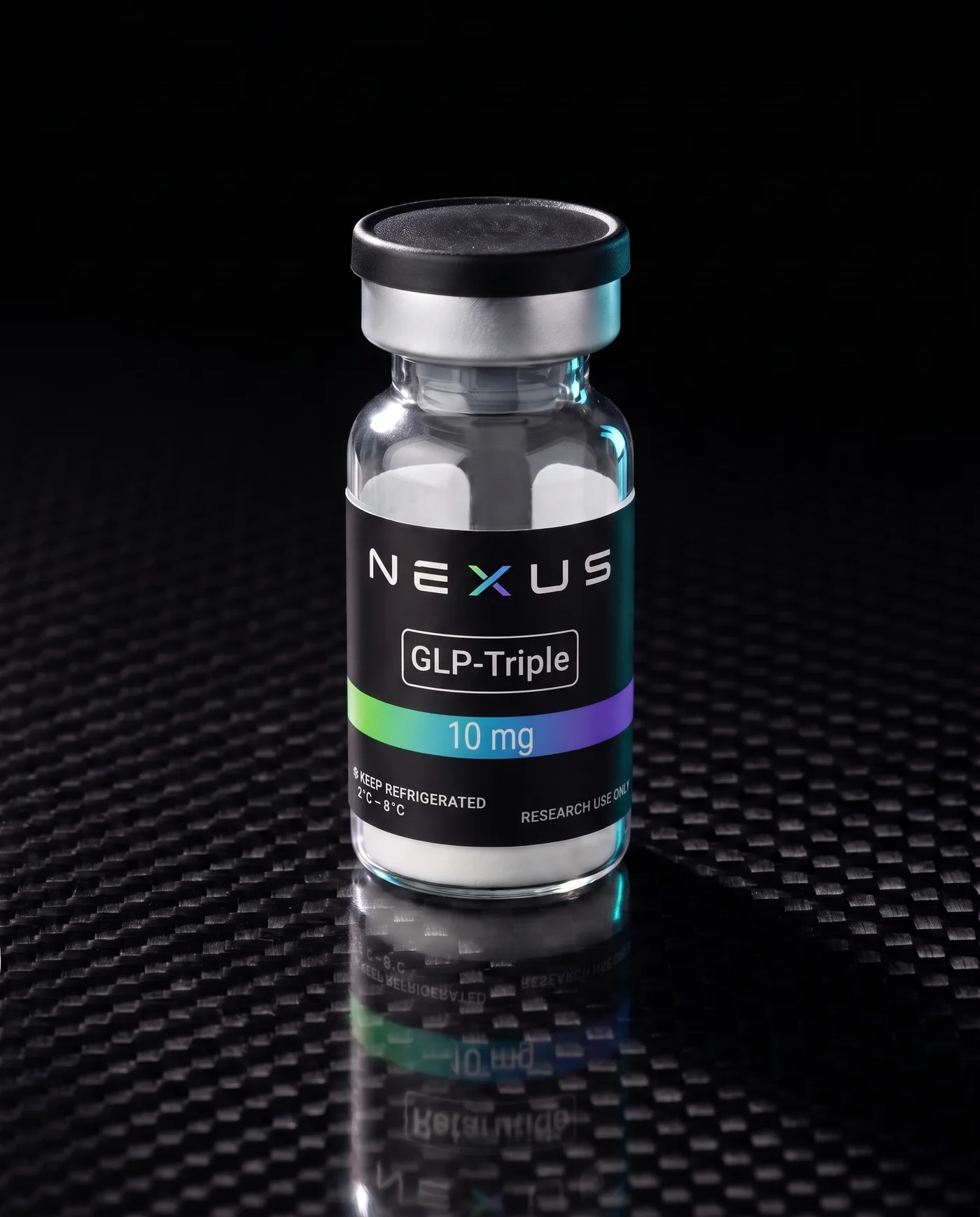
For laboratory research only. Tesamorelin 10mg is not suitable for human or animal consumption. Not a drug, food or cosmetic. To be handled by qualified personnel in accordance with applicable regulations.